
How fast can you set up sanitation after a disaster in Fremont?
Speed matters most in the first 48 hours, when shelters fill and city water lines may still be down. Fremont Porta Pros keeps standard units, ADA accessible porta potties and handwashing stations staged for rapid dispatch, and most disaster deployments in Fremont go out same day. A roll-off delivery needs about 60 feet of straight clearance behind the truck, so we scout driveways, parking lots or staging areas before wheels arrive. If the closest shelter site sits near Newark, 7.9 miles west, or Union City, 11.0 miles northwest, that drive time factors into our routing so units land where evacuees actually are. For larger shelter operations we bring in restroom trailers, including 4 stall and 8 stall configurations, plus shower trailers when displacement runs past a few days. We also pair units with temporary fencing to secure a staging perimeter and light towers so crews and residents can move safely after dark. Every disaster response starts with a quick site walk, because a flooded lot or a cracked driveway changes where a unit can sit. OSHA 1926.51(a)(1) requires an adequate supply of potable water in any place of employment, which applies directly to relief workers staffing a shelter or command post, so we bring water service alongside the toilets, not as an afterthought.
What sanitation do shelters and relief workers actually need?
A shelter is a workplace and a housing site at once, so it needs both worker-facing sanitation and resident-facing sanitation, and the two ratios are not the same thing. OSHA 1926.51(c) sets the baseline for job sites: one toilet for 20 workers or fewer, then one toilet seat and one urinal per 40 workers once headcount climbs past 20. Relief camps and shelters in Fremont should plan past that minimum, because line waits during a crisis create their own hazard. We typically pair standard portable toilets with at least one accessible unit per cluster, since ADA Standards section 213.2 requires 5 percent of clustered single-user units to be accessible, and never fewer than one. That unit needs a 60 inch turning circle under ADA Standards 304.3.1 and a stable, slip-resistant surface under ADA Standards 302.1, which matters when a unit sits on gravel or mud after a flood. Handwashing is not optional: 29 CFR 1910.141(d)(2) requires soap and towels or a hand-drying device, and hand sanitizer alone does not satisfy it. We deploy handwashing station rentals and portable sinks next to every toilet cluster for exactly this reason, and add hand sanitizer stations as a supplement, never a substitute. If the response involves debris removal, roll-off dumpsters and temporary fencing usually follow within the first day or two.
Why does portable sanitation matter more during a disaster than a normal event?
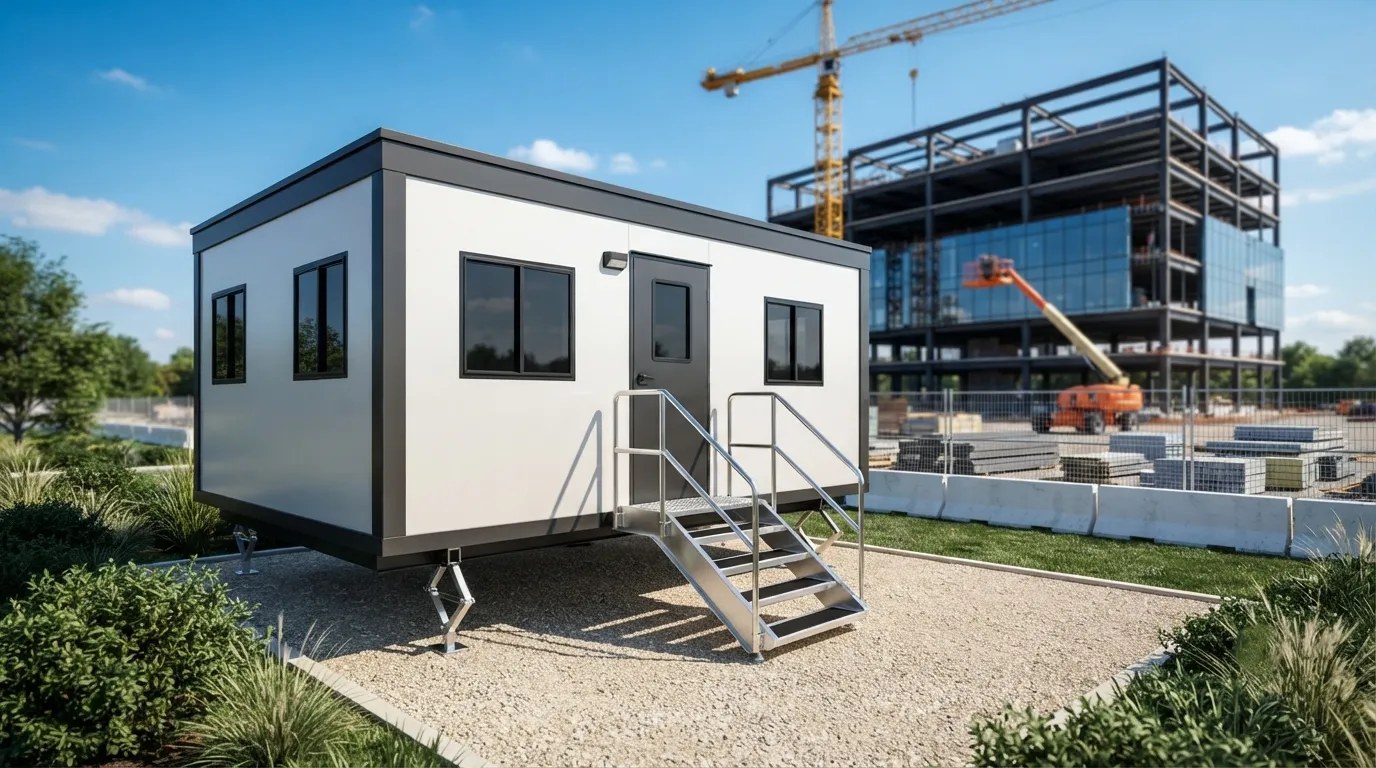
Because the systems people rely on every day, city water, sewer, even electricity, may all be down at once, and a shelter or command post cannot wait for repairs. Fremont households on septic systems face their own version of this: a typical residential tank is pumped every 3 to 5 years under normal use, but flooding can push a tank past capacity fast, and septic pumping service or emergency septic service becomes urgent rather than routine. Restaurants and shelter kitchens running extended hours can overload a grease interceptor well ahead of schedule too; interceptors need pumping once fats, oils, grease and solids reach 25 percent of liquid depth, and grease trap pumping should be checked before a kitchen goes into round-the-clock service. For longer-term recovery, storage container rentals and mobile office trailers give relief coordinators a dry, secure base once tents and folding tables stop cutting it. We have run this playbook for disaster relief sanitation work across Fremont and nearby communities, including sites near Milpitas, 8.2 miles southeast, where road access and staging space shape the plan as much as headcount does. A quick call to request a quote gets a crew scoping the site the same day.
| unit | duration | typical price |
|---|---|---|
| standard | day | $150 |
| standard | week | $200 |
| ada | day | $230 |
| trailer | day | $800 |
| service_fee | day | $175 |
How many portable toilets does a shelter need?
Use OSHA 1926.51(c) as the floor: one toilet per 20 people, then additional fixtures per 40 as headcount grows. Shelters should plan tighter than that minimum given line pressure during a crisis. Our how many porta potties do I need guide walks through headcount math in detail.
Can you deliver the same day during an active emergency?
Usually, yes. Fremont Porta Pros prioritizes disaster dispatch ahead of standard bookings when a declared emergency is active. Call ahead so we can confirm site access, since a roll-off or trailer delivery needs roughly 60 feet of clear approach behind the truck.
Do you provide ADA-accessible units for shelters?
Yes. ADA Standards 213.2 requires at least one accessible unit per cluster, with a 32 inch clear door opening under section 404.2.3 and a 36 inch clear route under 403.5.1. See our ADA restroom requirements page for the full spec list.
What if the shelter site has no water or power?
We bring both. Handwashing stations carry their own water supply, and temporary power poles or light towers cover sites where the grid is down. OSHA 1926.51(a)(1) requires potable water at any staffed site, disaster or not.
How long can units stay on site during recovery?
As long as the response needs them. Many disaster deployments run week to week rather than a fixed term; check monthly porta potty rental options once recovery shifts from emergency to extended cleanup.
Next step
Get a delivery date
Tell us the address, the dates and the headcount. We size the order and confirm the route.