
Where should a porta potty go on a Fremont job site?
Start with a flat surface. A standard unit runs about 44 by 48 inches on the ground and stands roughly 92 inches tall, so it needs a level pad, not a slope, or it can rock and lean under wind load. Keep it away from storm drains and set it where the service truck has a clear path in and out. Fremont Porta Pros checks clearance before drop-off, because a unit blocked by parked equipment just gets skipped on service day.
If the unit sits near a public sidewalk or street, placement in the public right of way needs confirming with the City of Fremont before delivery. That is separate from a dumpster placement permit, which is its own approval and its own cost, so do not assume one covers the other. For jobs that also need a bin on site, check dumpster permit requirements early, since permit costs and lead times vary by parcel and by street.
For a full breakdown of unit counts against your headcount, the how many porta potties do I need guide walks through the ratios. Pair that with the porta potty rental checklist before your delivery date so nothing gets missed.
How much clearance does delivery and pickup need?
Plan for straight clearance behind the drop point, not just beside it. A roll-off delivery needs about 60 feet of straight clearance behind the truck to back in safely, and portable toilet delivery works the same way in tight Fremont lots. Give the driver a straight shot rather than a tight turn through parked cars. If your site is landlocked, talk through the approach with Fremont Porta Pros before the truck shows up, not after.
Ground stability matters as much as width. ADA Standards section 302.1 calls for surfaces that are stable, firm and slip resistant, which applies directly to any pad supporting an ADA accessible porta potty. Gravel that shifts underfoot or turf that goes soft after rain both fail that standard. If your event or job runs through a wet stretch, read porta potty in winter for ground prep that holds up.
What OSHA and ADA rules affect where units sit?
OSHA 1926.51(c) sets the ratio for construction sites: one toilet facility for 20 workers or fewer, then additional fixtures as the crew grows past that. That rule drives count, but placement rules follow from it too, since units bunched in one corner do not serve a crew spread across a large Fremont site. Spread them along the actual work path instead. The OSHA portable toilet requirements page covers the full ratio table if your crew count is climbing.
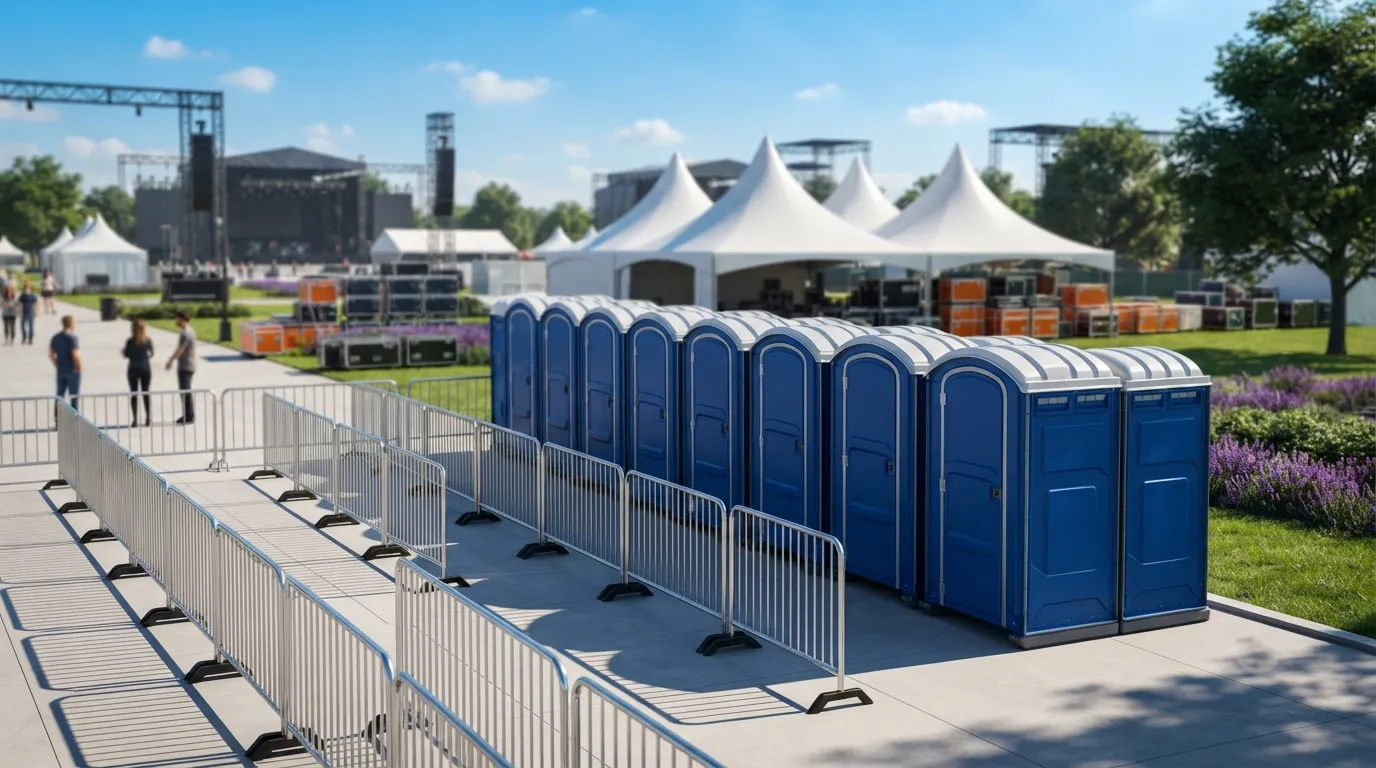
ADA Standards section 213.2 requires that where single-user units are clustered, at least 5 percent, and never fewer than one, be accessible. That accessible unit needs its own clear route: ADA Standards section 403.5.1 calls for a 36 inch clear path, and section 404.2.3 sets minimum door width at 32 inches. Section 304.3.1 also requires a 60 inch turning circle in front of the unit, so do not tuck it behind equipment or a fence line. Full detail lives on ADA restroom requirements and ADA accessible porta potty.
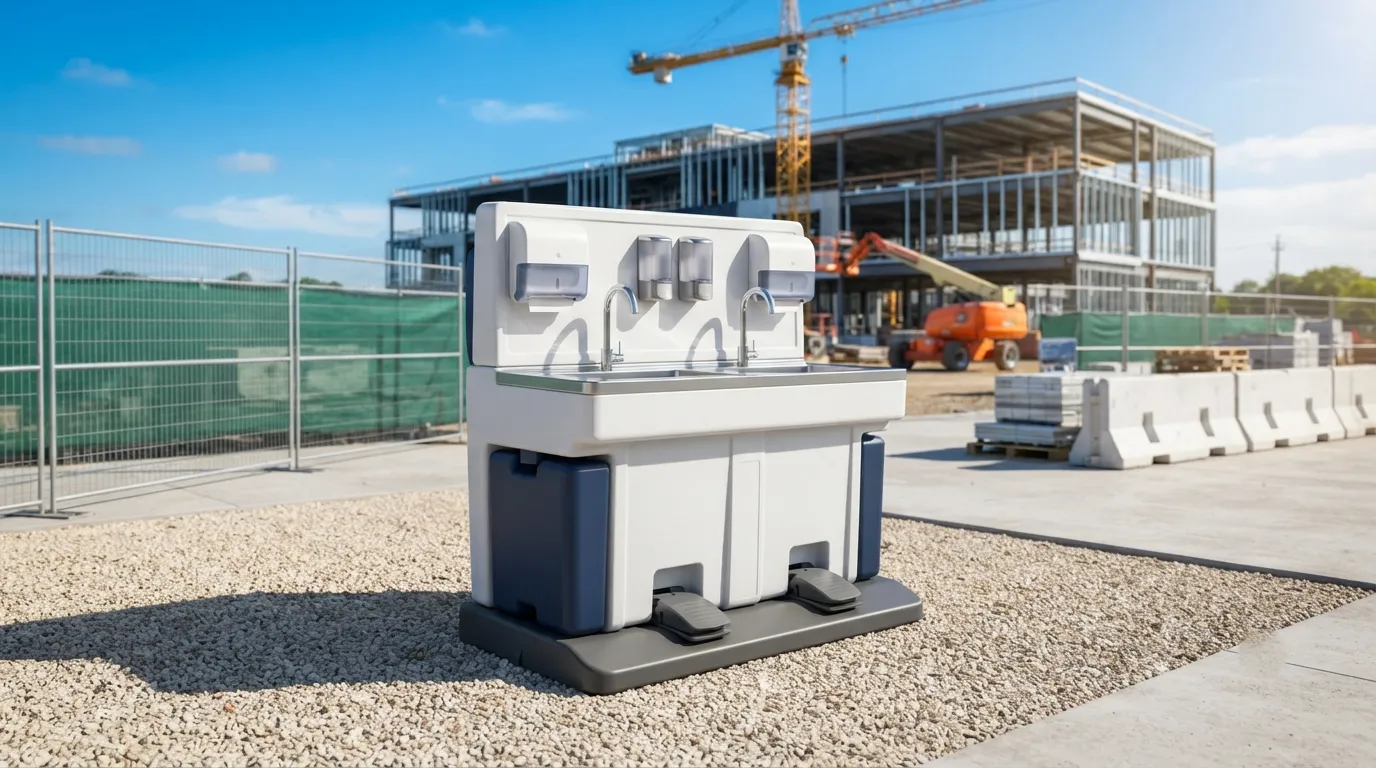
Handwashing has its own placement logic. 29 CFR 1910.141(d)(2) requires soap and towels or a hand-drying device at wash stations, and hand sanitizer alone does not satisfy it. OSHA 1926.51(f)(1) applies specifically where crews are applying paints, coatings, herbicides or insecticides, so a painting crew needs a wash station within reach of that task, not just at the gate. See handwashing station rental and handwashing station requirements for setup options.
Where should other site equipment sit relative to the toilets?
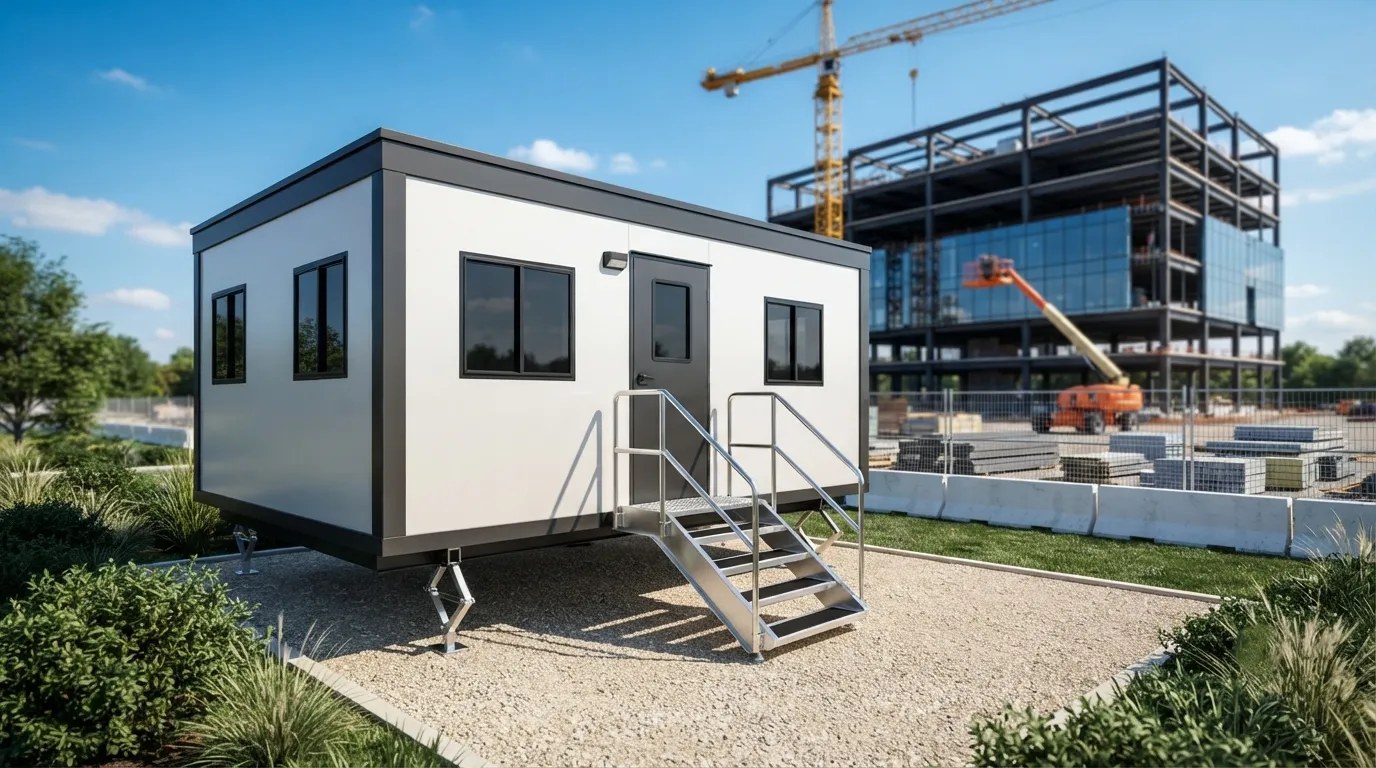
Keep the toilet, the dumpster, and any storage container rental far enough apart that trucks are not competing for the same approach. A 40ft storage container or mobile office trailer rental needs its own flat pad too, and if a trailer's door hardware fails on site, mobile office trailer replacement doors are a maintenance call worth planning for on longer rentals rather than a same-day fix.
Fencing changes placement math. A temporary fence rental around the whole site can route foot traffic away from the drop zone, which keeps the unit's door swing clear. If your job runs alongside farm work, note that OSHA 1928.110 sets a one-per-20-worker sanitation standard for hand-labor agricultural crews, with facilities reachable within a quarter mile walk. Fremont sites 8 miles southeast in Milpitas or 8 miles west in Newark deal with the same layout questions, so the logic travels well across the service areas footprint. Rental units with flushable features, like a deluxe unit with an Ozark River portable sink, sometimes need Ozark River portable sink replacement parts after heavy seasonal use, so ask about part swaps before signing a long-term contract. Septic-side jobs follow similar rules; a Placerville septic pumping service crew and a Fremont one both size trucks around the same 60-foot clearance rule, and both check septic tank pumping cost against tank size before quoting.
How far from the work area should a porta potty be placed?
Close enough that workers actually use it. ANSI/PSAI Z4.3 sets a service interval baseline, but placement distance is about foot traffic, not paperwork. A unit across a busy Fremont lot gets skipped. Keep it inside a short walk of the main work zone.
Can a porta potty sit in a Fremont street or sidewalk?
Only with city confirmation first. Placement in the public right of way is not automatically allowed, and Fremont Porta Pros checks with the city before setting a unit there. Assume you need approval until told otherwise.
Does a dumpster need a separate permit from the porta potty?
Yes, they are separate approvals. A dumpster placement permit covers the bin, not the toilet, and costs vary by site and duration. Check dumpster rental cost alongside permit requirements before you budget the job.
What ground surface works best under a porta potty?
Flat, firm, and stable. ADA Standards section 302.1 requires slip-resistant, stable surfaces, which rules out soft turf or loose gravel. Concrete, asphalt, or a compacted pad all work. Confirm ground condition before delivery day.
How many accessible units does a large Fremont event need?
At least one, and 5 percent of the total if you cluster several units. ADA Standards section 213.2 sets that minimum. A 40-unit festival needs at least two accessible units under that math, placed with full turning clearance.
Next step
Get a delivery date
Tell us the address, the dates and the headcount. We size the order and confirm the route.